A late-summer and fall exterior treatment for the bugs that cover your sunny walls, then try to spend the winter inside.
Same-day reply
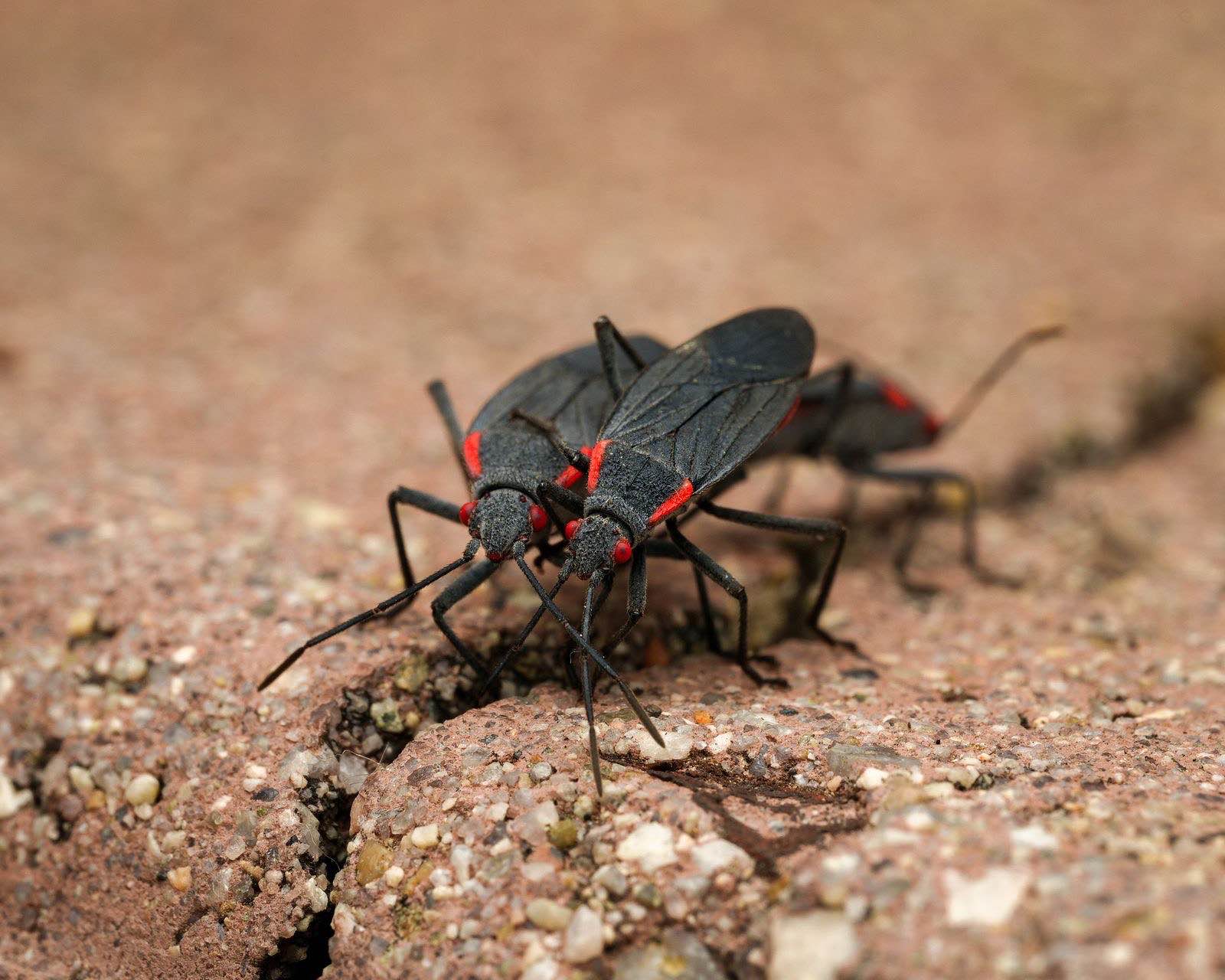
As the nights cool in late summer and fall, boxelder bugs and stink bugs go looking for somewhere warm to spend the winter. They gather on the sunny south- and west-facing walls of your home to soak up the heat, then work their way into cracks, gaps and wall voids.
They're often called fall invaders, and they're a nuisance rather than a structural pest. They don't eat wood and they don't breed indoors over winter. But they show up in groups on siding, window frames and screens, and the ones that make it into the walls tend to wander into living spaces on sunny winter days and again in spring.
Fall invaders follow the sun and the gaps. Here's where homeowners usually notice them first.
The sunny sides of the house are the gathering point on warm fall afternoons.
They cluster around frames, screens and shutters, looking for a gap to crawl through.
Gaps under the siding and around soffits lead straight into wall voids and attics.
Many spend the winter tucked inside walls and attics, out of sight.
Bugs inside the walls become active when the sun warms the wall, and wander into rooms, especially bright ones.
As temperatures climb, overwintering bugs become active again and try to make their way back outside.
This is a late-summer and fall service, timed to the weeks when these bugs start gathering on homes.
We look at where bugs are gathering and where they're getting in, with a close look at the sunny south- and west-facing walls.
Webs, egg sacs and debris come off the eaves, soffits, window frames and light fixtures with an extension-pole brush, so the treatment goes onto a clean surface.
The south- and west-facing walls, where these bugs gather for warmth, get extra time and careful coverage.
A band 1 metre (3 ft) up and 1 metre (3 ft) out along the foundation, plus window and door frames, utility penetrations, under the first lip of siding and corners.
A light treatment on the de-webbed soffits and eaves, where bugs climb looking for a way in.
A hand duster puts a fine dust into spots a liquid can't reach, such as weep holes, behind shutters and deep cracks.
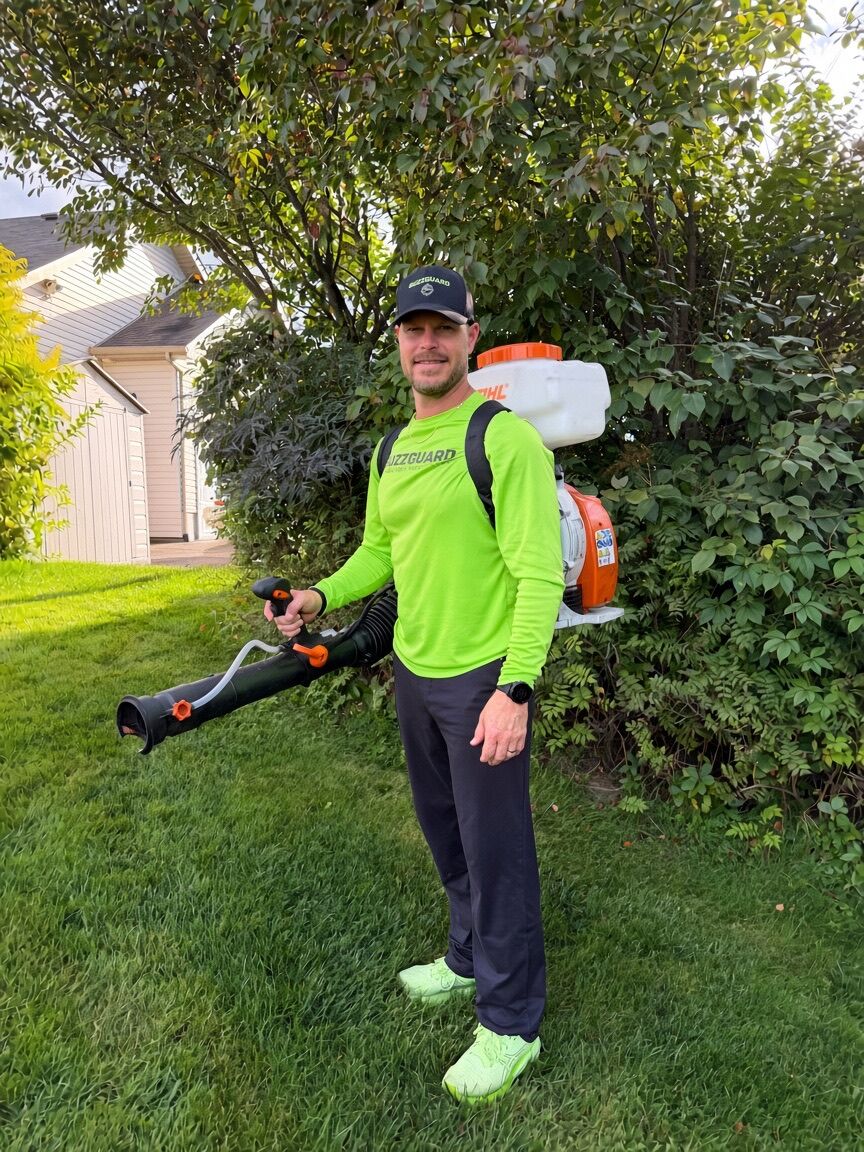
Every BuzzGuard visit runs the same way, because we treat your home like it's our own.
Treatment works best on a house that's hard to get into. These steps help, and late summer is the time to do them.
Caulk gaps around window and door frames, utility lines and siding edges, and replace worn door sweeps and weatherstripping.
Repair torn window screens and check that soffit, attic and dryer vents are screened.
Boxelder (Manitoba maple) trees that produce seeds feed boxelder bugs. Homes beside them tend to see more bugs every fall.
Rake up leaves and move boards, rocks and debris away from the foundation, where bugs shelter on cool nights.
Indoors, vacuum bugs up and empty the bag or canister outside. Crushing stink bugs releases their odour, and squashed boxelder bugs can stain fabric.
Treatment does the most good before bugs have moved into the walls, so plan it for late summer and early fall.
Boxelder bugs and stink bugs gather on the sunniest, warmest walls of a house as the weather cools, which usually means the south- and west-facing sides. They're warming up and looking for a gap to crawl into for the winter. That's why our fall treatment pays extra attention to those walls.
Late summer, before the bugs start gathering in numbers. Once they've moved into the walls for the winter, there's much less an exterior treatment can do.
They're a nuisance pest rather than a structural one. They don't eat wood or damage the house, and they don't breed indoors over winter. The trouble is the numbers, the smell when stink bugs are crushed, and the stains squashed boxelder bugs can leave on fabric.
Bugs that made it into your walls in fall stay mostly inactive, but a sunny day can warm a wall enough to wake them up. They then wander toward the light and end up in your rooms. Vacuum them up as they appear.
Our fall invader service is an exterior service. It focuses on the walls, gaps and entry points bugs use to get in. For the ones already indoors, a vacuum is the best tool.
We set the schedule for your property when we quote, based on how many bugs gather on your home and when they start to show up.
Keep children and pets indoors during treatment and off treated areas until the spray has dried, as the label directs. Back to enjoying your yard once the spray has dried, as the label directs.
Yes. Fall invaders are covered by the same exterior structure service as spiders and wasps, so it fits easily into an existing visit plan. Ask about it when you request a quote.
Free quotes, and most go out the same day.
