Nests under the eaves, inside the deck or down in the lawn, treated by trained technicians in protective gear so you don't have to get close.
Same-day reply
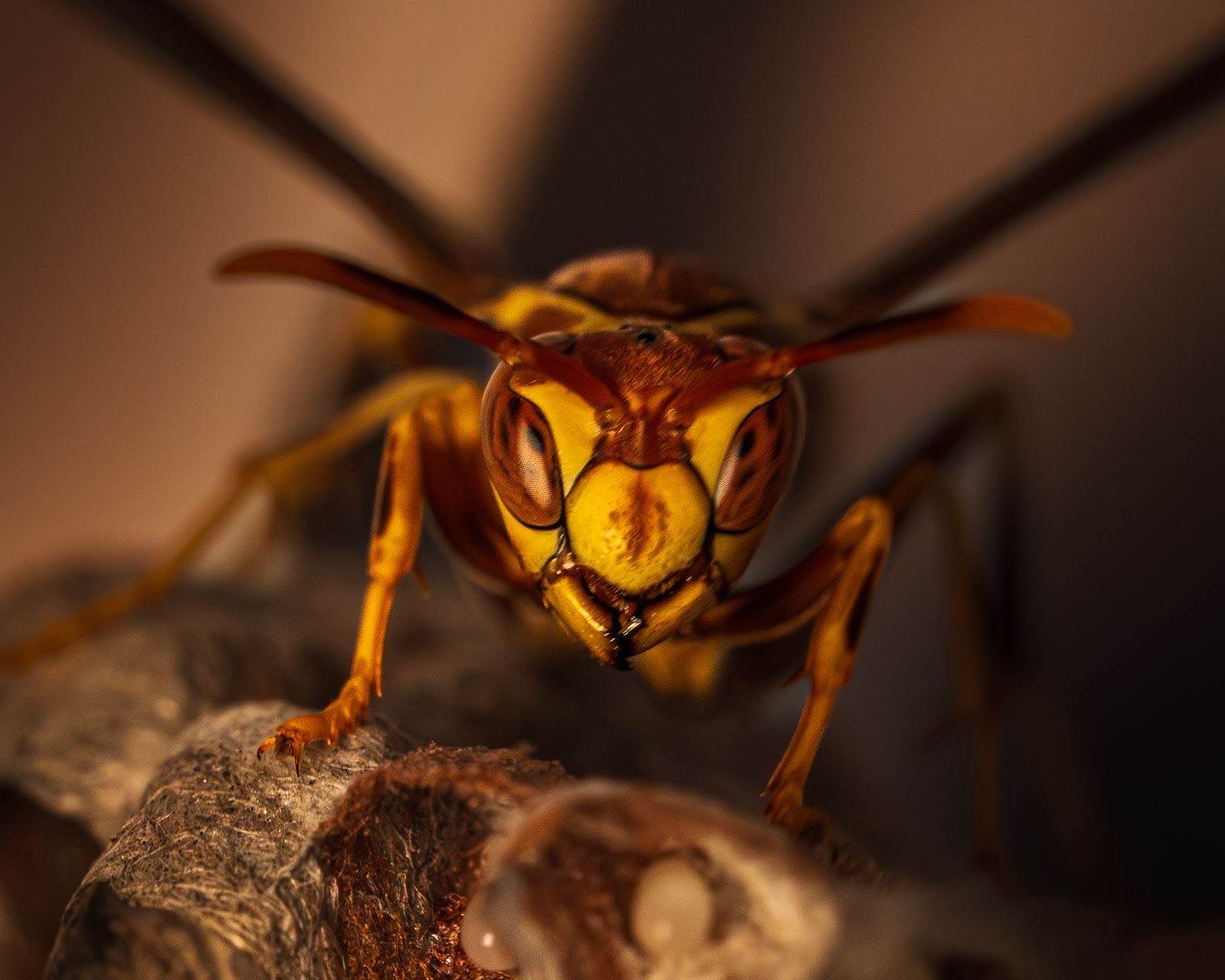
A wasp nest that was the size of a golf ball in June can hold a busy colony by August. That's when yellowjackets start crashing patios, barbecues and garbage bins, and when a lawn mower or a stray soccer ball is most likely to set off a nest.
Wasps and hornets do some good, since they hunt other insects, so not every nest needs treatment. The ones that do are close to doors, decks, play areas and walkways, where people and pets are bound to get near them. Those are the nests we deal with.
Bees are pollinators, and we leave them alone. Use this quick field guide to tell what's buzzing around your yard.
Wasp work needs a plan before anyone gets close. Every nest treatment follows the same steps.
We locate the nest, confirm what's living in it and check the area for active honeybee hives or ground-nesting bees before any treatment starts.
We don't treat beehives, and we don't spray flowering plants. Applications are adjusted to keep drift away from blooms and bee activity.
Technicians wear protective gear, including long sleeves, gloves and eye protection, and plan a clear exit route before approaching the nest.
The nest is treated using the protocol for that species, whether it's in the ground, inside a wall void, under the eaves or hanging in a tree.
For homes that see new nests every year, a residual barrier on de-webbed eaves and soffits, corners, under decks and around entry points helps reduce new nests on the house.
Your technician tells you what was found and treated, what to expect around the nest over the next while and what to do if you spot a new one.
Protecting pollinators is part of how we work on every property, whether we're there for wasps, mosquitoes or ticks.
Before spraying, technicians look for active honeybee hives and ground-nesting bees, and leave them alone.
We don't spray flowering plants. Gardens in bloom are left out of the treatment.
Applications are adjusted so spray doesn't drift onto blooms or bee activity, and we don't treat in high winds.
Found bees rather than wasps? We'll tell you, and leave the nest alone. A local beekeeper may be able to help with a honeybee swarm.
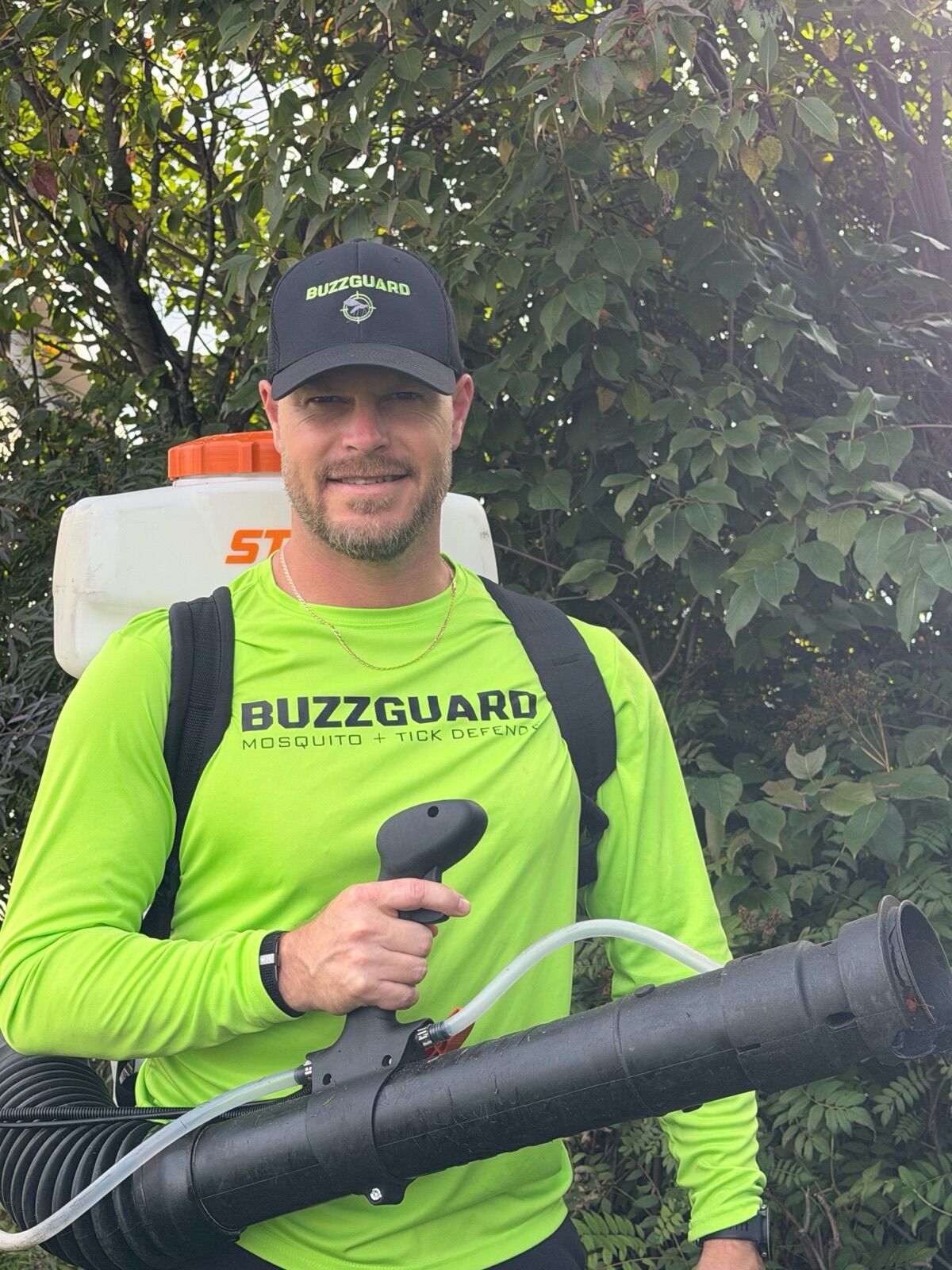
We treat your home like it's our own, and that goes double when there's a nest near your door.
You can't stop a queen from scouting your yard in spring, but a few habits make your home a lot less interesting to wasps.
Tight lids on garbage, recycling and compost cut off one of the biggest late-summer food sources.
Use cups with lids outdoors in August and September, and clear plates and sweet drinks promptly.
Rotting apples and pears under backyard trees draw yellowjackets in large numbers.
Look under eaves, deck boards, railings, sheds and play structures in late spring, when nests are still small.
Note any hole with steady wasp traffic before you mow, and keep kids and pets away from it.
Fix gaps in siding, soffits and vent screens, which are common doorways into wall voids. Wait until an active nest has been treated.
We don't recommend it. Disturbing an active nest can set off a defensive swarm, and ground and wall-void nests are often much bigger than the entrance suggests. Keep people and pets away and let a trained technician in protective gear handle it.
Not automatically. During mosquito and tick visits, our technicians avoid spraying into wasp nests, because disturbing one without the right gear and plan can trigger a swarm. If there's a nest you want dealt with, tell us and we'll book it as a wasp treatment.
No. We check for active honeybee hives and ground-nesting bees before every treatment and leave them alone. We don't spray flowering plants, either.
Not while the nest is active. Yellowjackets often nest in wall voids through a small gap in the siding or a vent, and blocking the entrance can send them looking for another way out, sometimes into the house. Have the nest treated first, then seal the gap.
Queens start new nests in spring, colonies grow through the summer, and activity peaks in late summer and early fall, when wasps are most persistent around food. Colonies die off with the hard frosts, and the old paper nests aren't reused the next year.
Keep children and pets indoors during treatment and off treated areas until the spray has dried, as the label directs. Back to enjoying your yard once the spray has dried, as the label directs.
Yes. Along with treating active nests, we can add a residual barrier to the eaves, soffits, corners, decks and entry points where wasps like to build. We'll recommend a plan for your property when we quote.
Yes. Wasps are part of the same exterior structure service that covers spiders, boxelder bugs and stink bugs, so it's easy to add to a visit plan. Ask about it when you request a quote.
Free quotes, and most go out the same day.
